Description
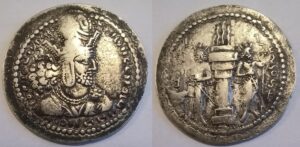
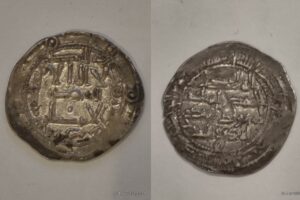
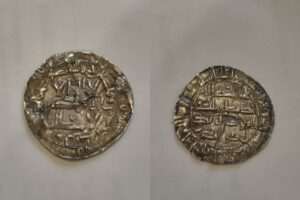
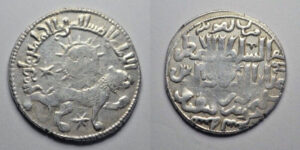
Small Roman Coin
Roman Emperor Honorius 384-423 AD
Bronze follis
Obv.: DN HONORIVS PF AVG; Helmeted, diademed and armored bust holding a spear on the shoulder and a shield decorated with a horseman slaying a warrior. Rev.: CONCORDIA AVGG; Constantinople sitting face
Diameter: 19 mm
Weight: 1.87g
======================
Honorius (Flavius Honorius Augustus) was a Roman emperor who ruled from 395 to 423 AD. He was the younger son of Emperor Theodosius I, who divided the Roman Empire between his two sons upon his death. Honorius inherited the Western Roman Empire, while his elder brother, Arcadius, ruled the Eastern Roman Empire.
Key Points of Honorius’ Reign:
- Early Rule and Regency:
- Honorius became emperor at the age of 10, so much of his early reign was dominated by his regent and military commander, Flavius Stilicho. Stilicho was a capable general who managed to defend the Western Empire against multiple threats, including invasions by the Visigoths and other barbarian groups.
- Invasions and Decline:
- The Western Empire faced significant challenges during Honorius’ reign, including the sack of Rome by Alaric and the Visigoths in 410 AD. This was a symbolic blow to the empire’s prestige, as it was the first time in nearly 800 years that Rome had been sacked.
- Britain was effectively abandoned as part of the empire’s territory during Honorius’ rule, with local authorities left to defend themselves against invasions.
- The Role of Stilicho:
- Stilicho played a key role in stabilizing the empire during the early part of Honorius’ reign but was executed in 408 AD due to court intrigue and accusations of treason. His death left the Western Empire without strong military leadership.
- Weak Leadership:
- Honorius is often regarded as an ineffective and indecisive ruler. His court was plagued by internal strife and power struggles, which further weakened the empire’s ability to respond to external threats.
- Continued Fragmentation:
- Under Honorius, the Western Roman Empire continued its trajectory of decline, losing control over significant territories to invading forces and separatist movements.
- Death:
- Honorius died of natural causes in 423 AD at the age of 38. He left no heirs, and his death marked the continuation of instability in the Western Roman Empire, leading to its eventual fall in 476 AD.
Honorius’ reign is often seen as a critical period in the decline of the Western Roman Empire, as his inability to effectively govern and defend the empire hastened its disintegration.