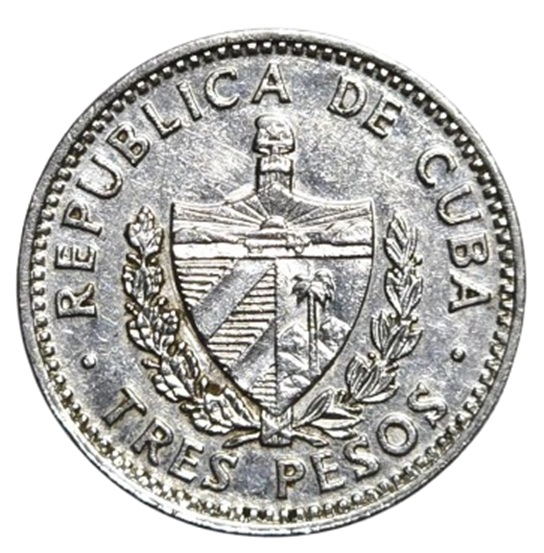
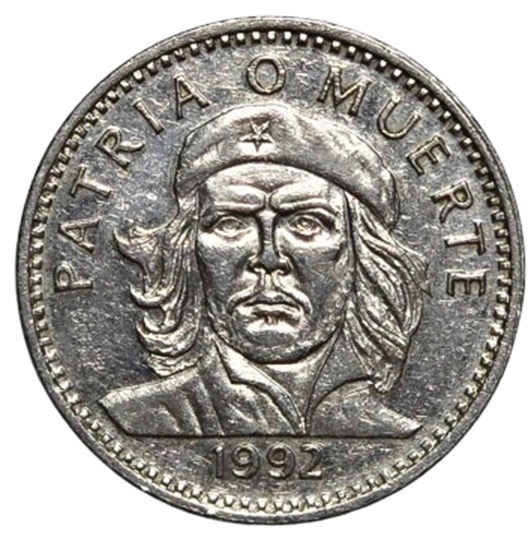
Forged in metal, immortalized in history — the 1995 Cuban 3 Pesos “Che Guevara” coin is more than currency; it is a symbol of revolution that echoes across generations.
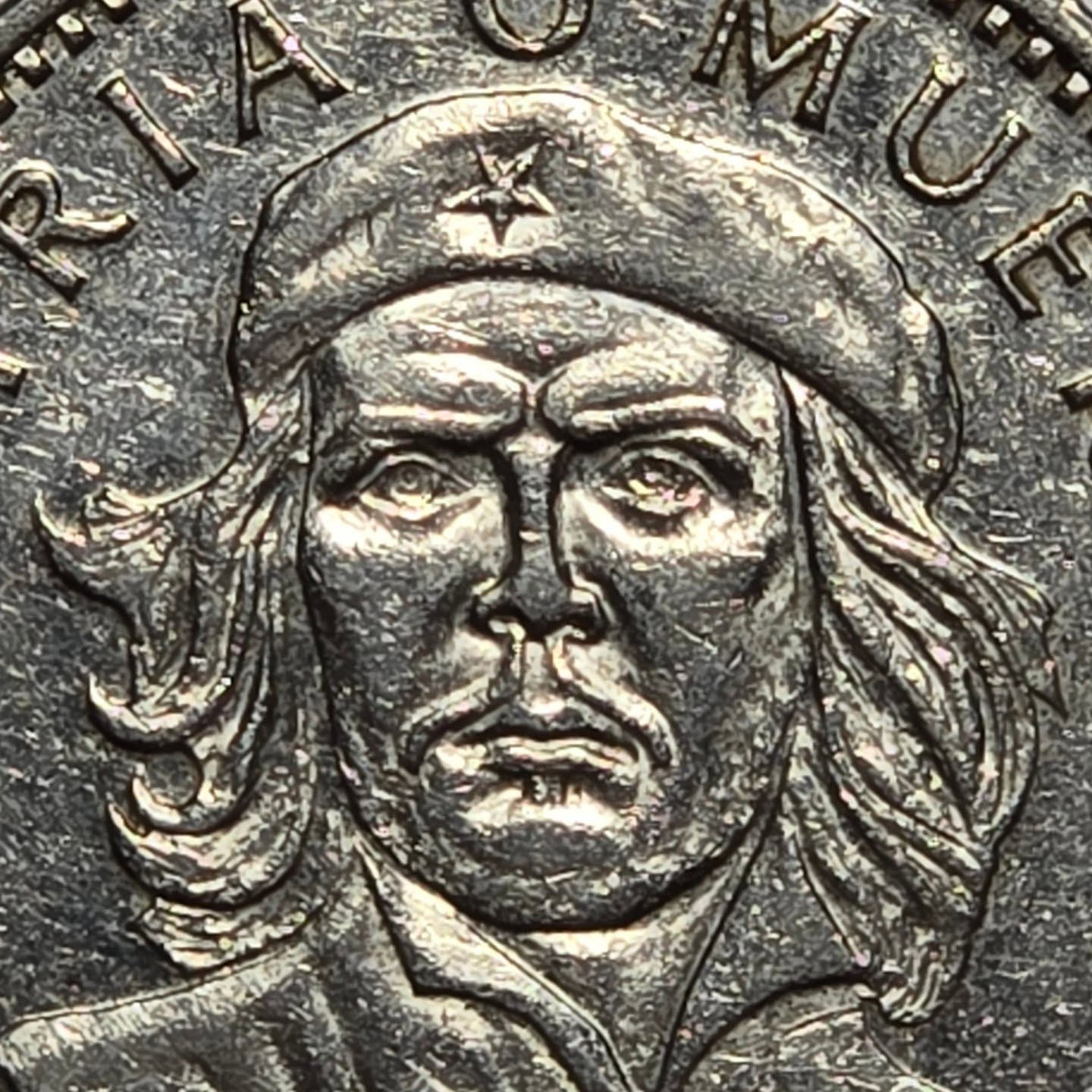
Issued by the Republic of Cuba, this striking piece captures the intense gaze of Ernesto “Che” Guevara beneath his iconic beret, a star engraved above his brow — a timeless emblem of defiance, ideology, and global impact. The artistry of the portrait radiates strength and conviction, making this coin not only a numismatic treasure but a cultural artifact of the 20th century’s most influential revolutionary movements.
Crafted from durable nickel-plated steel, this 3 Pesos coin carries a solid weight of 8 grams, with a diameter of 26.5 mm and a thickness of 2.3 mm — perfectly balanced in the hand, commanding in presence. The metallic sheen enhances every sculpted detail of Che’s determined expression, while the precise minting reflects Cuba’s commitment to preserving its revolutionary heritage in enduring form. Whether displayed in a private collection or held as a tangible connection to history, this coin embodies resilience, identity, and national pride.
For investors of revolutionary memorabilia, Latin American history enthusiasts, and investors in historical coinage, the 1995 Cuban 3 Pesos Che Guevara coin stands as a powerful acquisition. It is a conversation piece, a statement, and a preserved moment in time — where ideology met immortality in steel. Own a piece of history that continues to inspire movements, debates, and admiration across the world.
—–
Che Guevara was one of the most iconic and controversial figures of the 20th century. Born Ernesto Guevara in Rosario, Argentina, in 1928, he trained as a medical doctor before traveling across Latin America. Witnessing deep poverty and social injustice during his journeys profoundly shaped his political beliefs, pushing him toward Marxism and revolutionary activism.
Guevara became internationally known through his role in the Cuban Revolution alongside Fidel Castro. After helping overthrow the regime of Fulgencio Batista in 1959, he held several key positions in the new Cuban government, including head of the National Bank and Minister of Industries. He was instrumental in shaping Cuba’s early socialist policies and strengthening ties with the Soviet Union during the Cold War.
Beyond Cuba, Guevara sought to ignite revolutionary movements abroad, believing that global change required armed struggle against imperialism. He later attempted to spark uprisings in Congo and Bolivia. In 1967, he was captured and executed by Bolivian forces with CIA assistance. Though divisive—viewed by some as a hero and by others as a radical militant—his image remains one of the most recognizable symbols of rebellion and resistance worldwide.