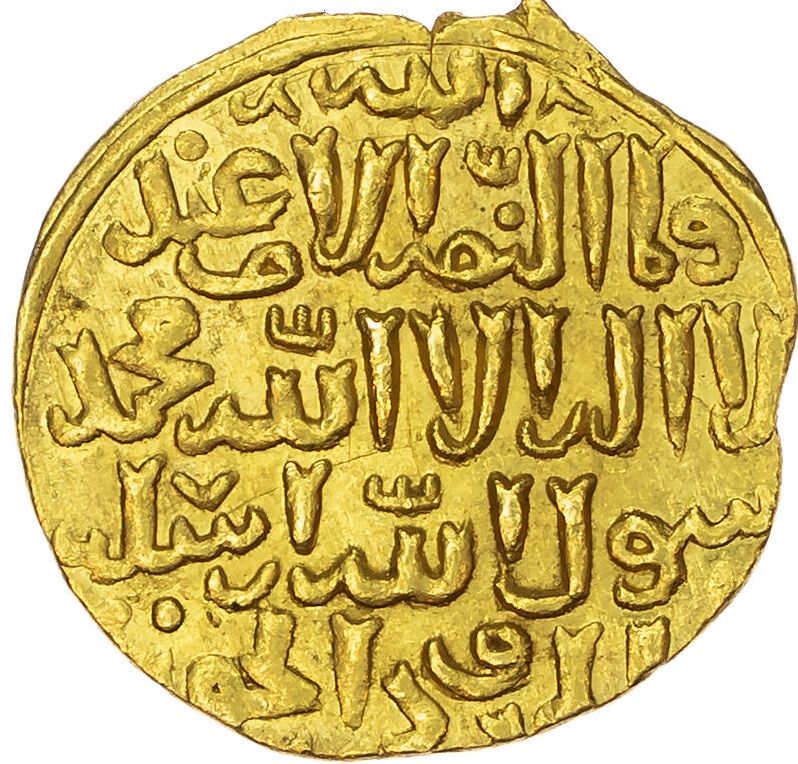
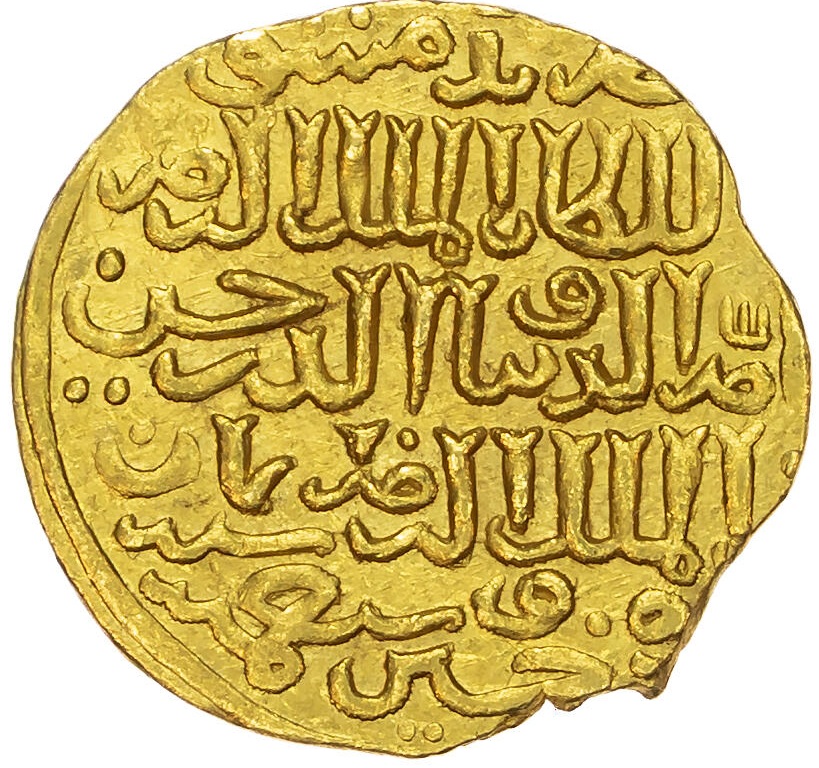
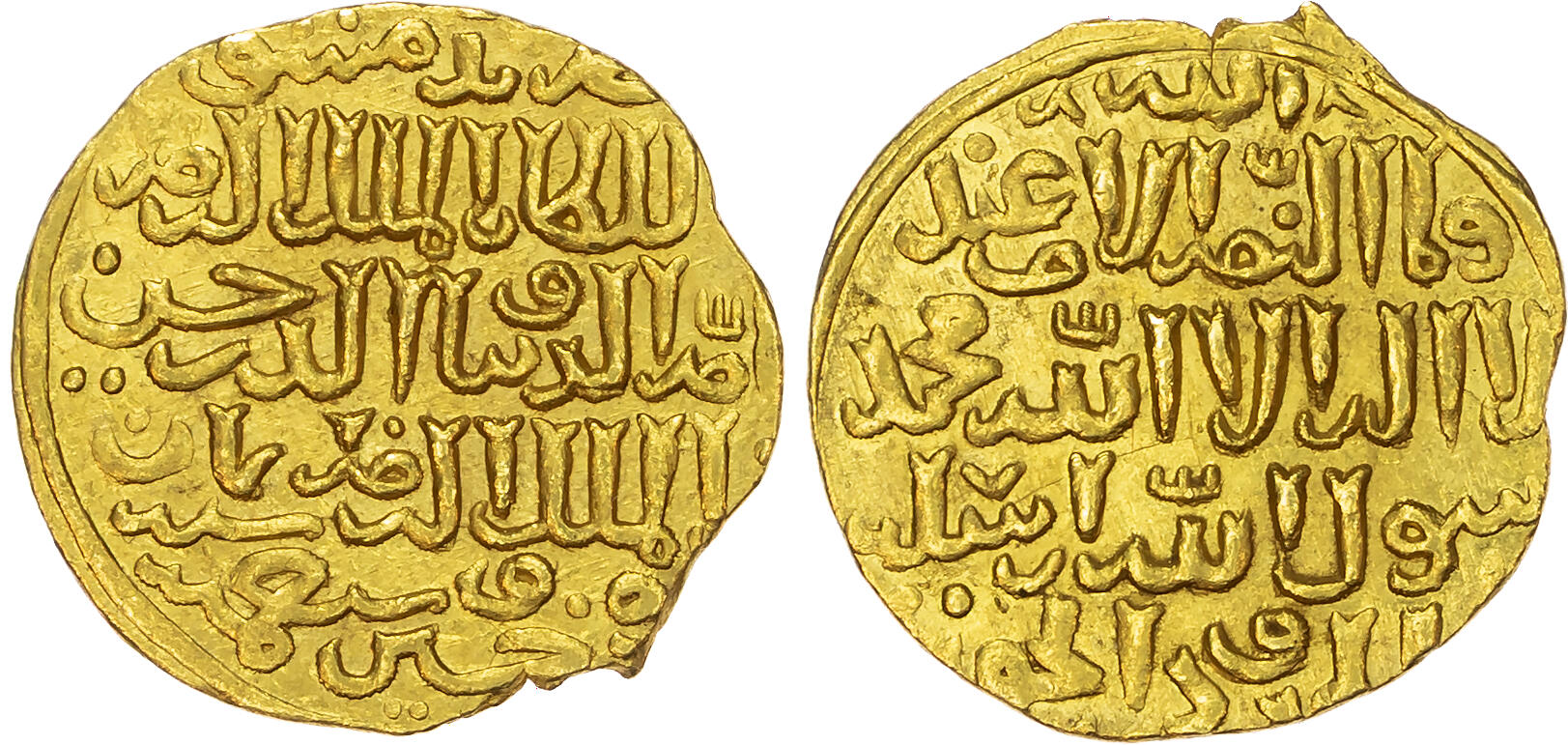
In the golden age of medieval Damascus, beneath the vaulted skies of a city that shimmered with scholarship, trade, and devotion, this extraordinary Gold Dinar was struck in the name of Sultan An-Nasir Hasan, ruler of the formidable Bahri Mamluks.
Minted in AH 758 (1357 AD) in the illustrious city of Damascus—known in Arabic as Dimashq—this gold dinar weighs a commanding 5.23 grams with 24 mm in diameter and stands today in Extremely Fine condition, its calligraphy still radiant after more than six and a half centuries. Referenced as Album 944, this coin is not merely currency; it is a relic of power, faith, and refined Islamic artistry, born at a time when the Mamluk Sultanate stood as one of the great bastions of the Islamic world.
Sultan An-Nasir Hasan’s reign (AH 748–762 / 1347–1361 AD, with interruption) unfolded in a turbulent yet culturally vibrant era. Though he ascended the throne as a youth, his rule became emblematic of both political intrigue and architectural magnificence. It was under his patronage that Cairo witnessed the construction of his monumental mosque-madrasa complex, a structure that still commands awe. This dinar, struck in Damascus during his second reign, reflects the authority of a sovereign whose dominion stretched from Egypt through Syria, commanding trade routes that linked the Mediterranean to Arabia and beyond. Every letter impressed into this gold surface once proclaimed legitimacy, continuity, and divine sanction to a vast and diverse realm.
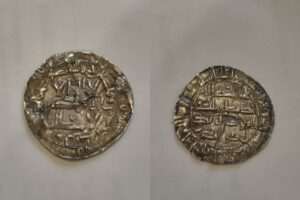
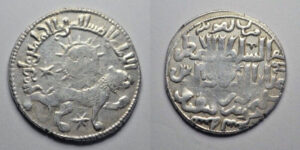
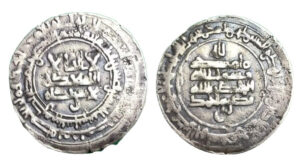
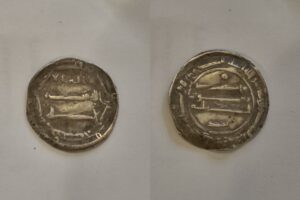
The obverse and reverse are adorned with bold, flowing Arabic inscriptions in masterful thuluth-inspired script, arranged in carefully balanced horizontal lines. The kalima and honorific titles radiate across the flan with confident elegance. The calligraphy is deeply struck, its contours sharp and legible, revealing the discipline and craftsmanship of the Dimashq mint. Unlike figurative coinage of other civilizations, Mamluk dinars celebrate the power of the written word—Qur’anic declarations, royal epithets, and mint formulas elevated into art. Here, theology and sovereignty merge seamlessly, transforming gold into proclamation.
Struck on a broad, slightly irregular flan, this specimen displays a subtly uneven edge—an authentic characteristic of hand-struck medieval coinage. Rather than detract, this gentle asymmetry enhances its historical integrity. One can almost imagine the moment of striking: the heated gold blank placed between engraved dies, the hammer descending with precision, the force immortalizing ink-like calligraphy into precious metal. The surfaces retain an appealing luster beneath a warm, honeyed patina, testifying to careful preservation across centuries. In Extremely Fine condition, the legends remain crisp, the fields remarkably smooth, and the overall eye appeal commanding.
The weight of 5.23 grams situates this dinar firmly within the classical Mamluk gold standard. During the 14th century, such a coin represented considerable wealth. It facilitated high-level commerce—caravan trade, diplomatic tribute, elite transactions—across a region that was economically dynamic and culturally luminous. Damascus itself was a jewel of the Islamic world, famed for its textiles, metalwork, scholarship, and as a nexus for pilgrims traveling to Mecca. To hold this dinar today is to hold a fragment of that thriving network of exchange and devotion.
Historically, the Bahri Mamluks were a military elite of slave origin who rose to become rulers of Egypt and Syria. Their dynasty defended the eastern Mediterranean against Crusader remnants and Mongol incursions, preserving Islamic civilization at a critical historical juncture. By the mid-14th century, despite internal court rivalries, the Mamluk state remained an intellectual and commercial powerhouse. This dinar embodies that paradox of strength and fragility—struck during a reign marked by palace intrigue yet reflective of an empire whose institutions remained formidable.
The artistry of this coin lies not in portraits or symbols, but in proportion, rhythm, and sacred geometry. Each line of script is harmonized within circular borders, framed by delicate marginal inscriptions. The die engraver achieved a remarkable balance between density and clarity, ensuring that titles and invocations remain readable without overcrowding the flan. The slightly undulating edge reminds us that perfection in medieval minting was measured not by mechanical uniformity but by legibility, weight fidelity, and aesthetic grace.
For investors of Islamic numismatics, Mamluk gold dinars represent one of the most intellectually rewarding fields. They demand appreciation not only of rarity and grade but also of Arabic epigraphy, political chronology, and mint attribution. Album 944 is a respected catalog reference, and examples in this level of preservation are increasingly elusive. Gold of this era was often melted, recoined, or lost to time. Survival in Extremely Fine condition—retaining strong detail and minimal wear—elevates this piece into the upper echelon of available specimens.
Beyond scholarship and rarity lies something more profound: continuity. This dinar has outlived empires, witnessed the fall of dynasties, and traversed centuries of change. It once moved through the hands of merchants, officials, perhaps even scholars in the bustling souqs of Damascus. Today, it stands as a tangible bridge to 1357 AD—a year when Europe grappled with the aftermath of the Black Death, when Islamic scholarship flourished in Syrian madrasas, and when gold dinars like this carried the authority of a sultan across continents.
Its presence commands attention. The luminous gold, the disciplined calligraphy, the weight of history—together they create a sensory and intellectual experience unmatched by modern minting. This is not bullion; it is narrative struck in metal. It speaks of faith declared in elegant script, of sovereignty asserted in gold, of a city whose name—Dimashq—echoes through millennia.
For the discerning collector, investor, or curator seeking a museum-caliber artifact from the medieval Islamic world, this Bahri Mamluk dinar of Sultan An-Nasir Hasan offers both aesthetic splendor and historical gravitas. It is a coin that rewards contemplation, scholarship, and pride of ownership. More than six hundred and sixty years after its creation, it remains luminous—an enduring testament to the artistry and authority of the Mamluk age.
A masterpiece of Damascus. A voice from the 14th century. A golden survivor of empire.