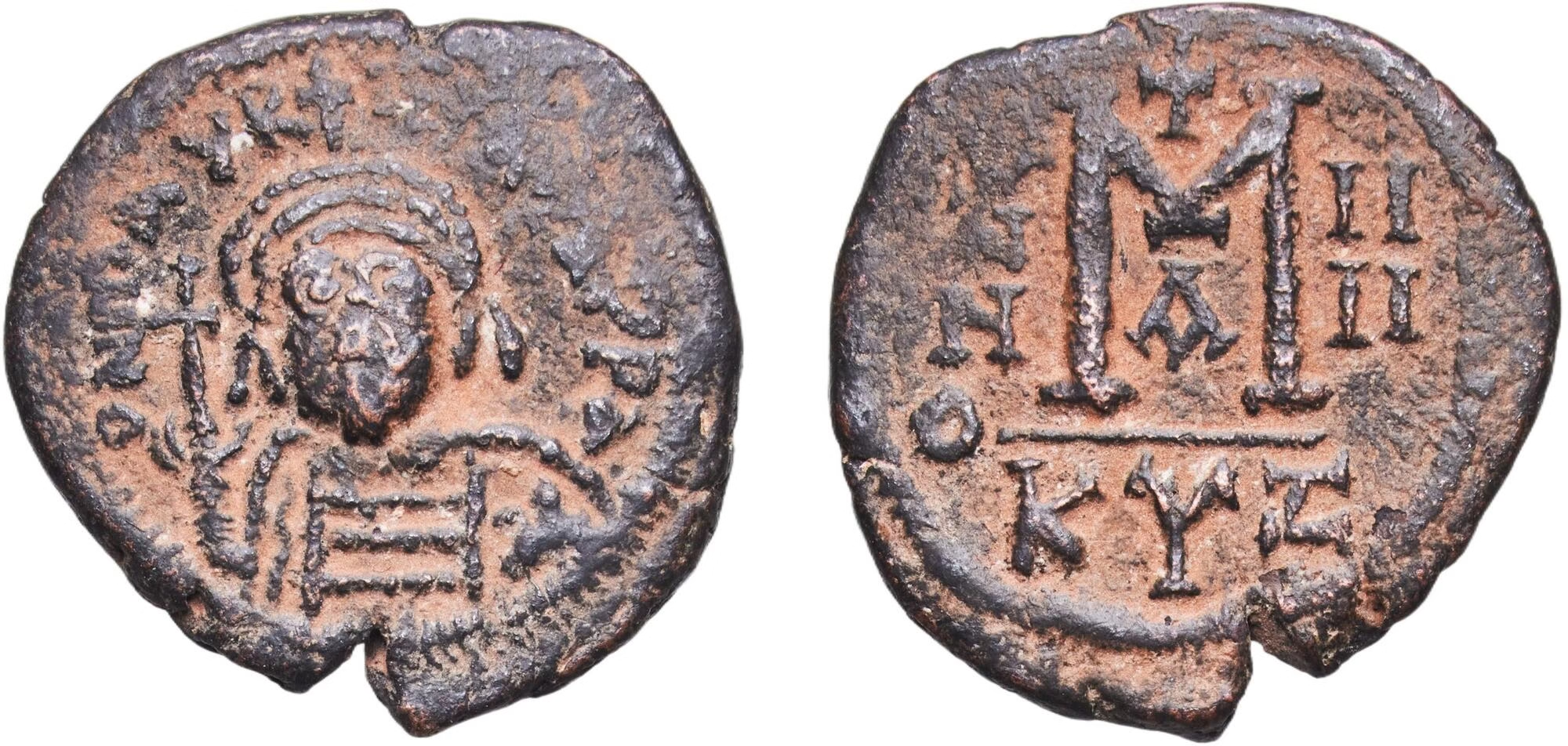
House of Emirates® is thrilled to offer its elite clientele this powerful bronze witness of the Byzantine state at a moment of imperial strain and resilience: a Cyzicus-minted 40 Nummi of Emperor Mauricius Tiberius, struck in the regnal year ANNO II/II (585–586 AD).
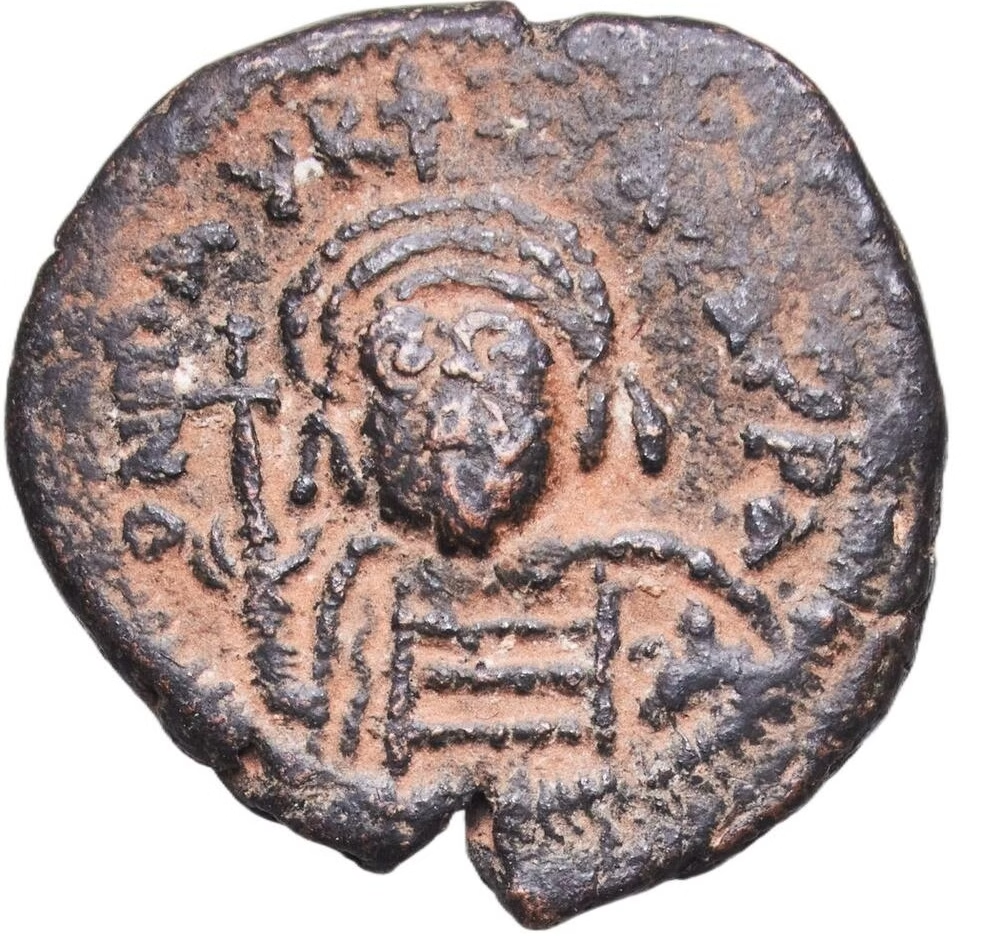
Emerging from the western shores of Asia Minor, this coin belongs to the early monetary reforms of Mauricius, an emperor-soldier whose reign was defined by relentless frontier wars, fiscal discipline, and the desperate effort to preserve Roman order in a world rapidly changing. The facing bust of the emperor, armored and stern, is not merely portraiture; it is propaganda in bronze, projecting authority to soldiers, merchants, and citizens at a time when the Avars, Slavs, and Persians pressed the empire from every direction.
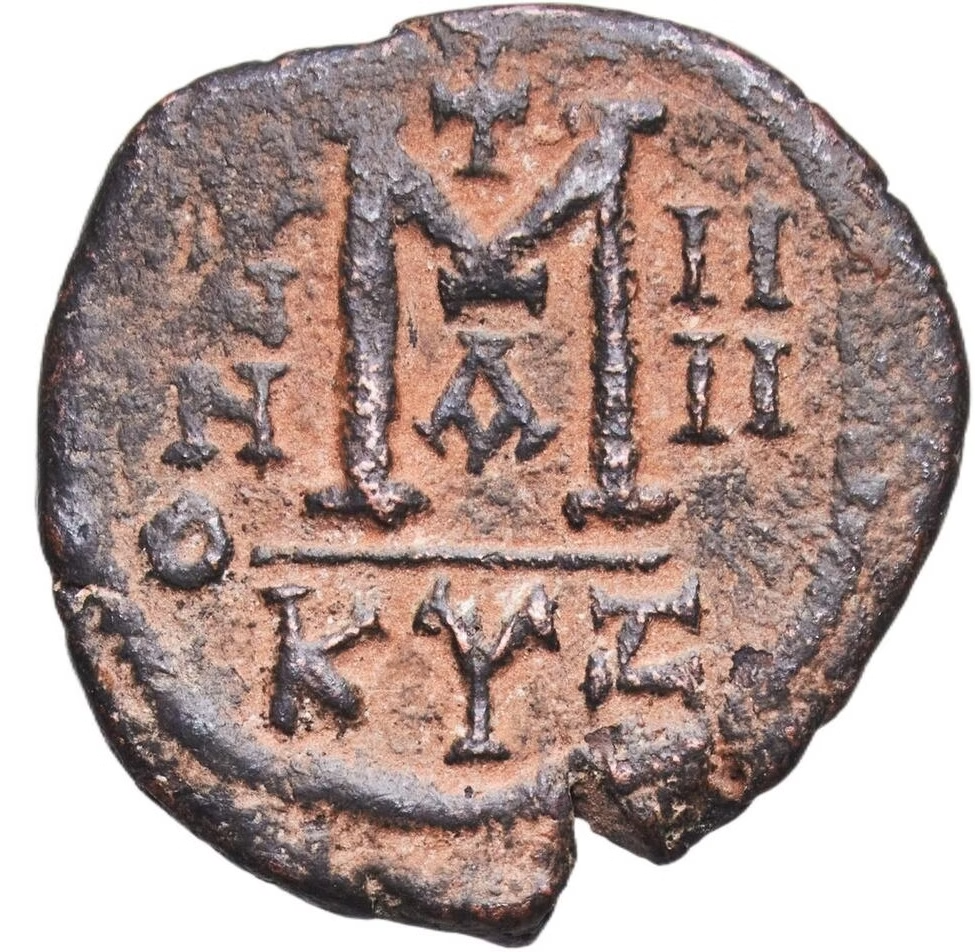
The reverse, bearing the large denomination mark “M” flanked by regnal year numerals and crowned with a cross, speaks the language of Byzantine statecraft with brutal clarity. This was money designed to circulate widely, to pay troops, to provision cities, and to remind every hand it passed through that Constantinople still ruled. Struck at Cyzicus, one of the empire’s most important mints, this 40 Nummi reflects the logistical heart of Byzantium, where bronze coinage formed the backbone of daily economic life. The clear KYZ mint signature and well-preserved legends anchor the piece firmly in the canonical references BCV 518, DOC I 120–133, and MIB I 84D–87D, confirming its scholarly and collector-grade importance.
Weighing 10.75 grams and preserved in Very Fine condition, this coin carries the honest wear of history rather than modern artifice. It is a relic from an empire fighting for survival through discipline and administration, long before the drama of its eventual decline.
For the historically minded investor, this piece represents more than bronze; it is a tangible fragment of imperial will, struck at a time when Byzantium still believed order could be enforced through law, coinage, and the image of the emperor himself.