£1,390.00
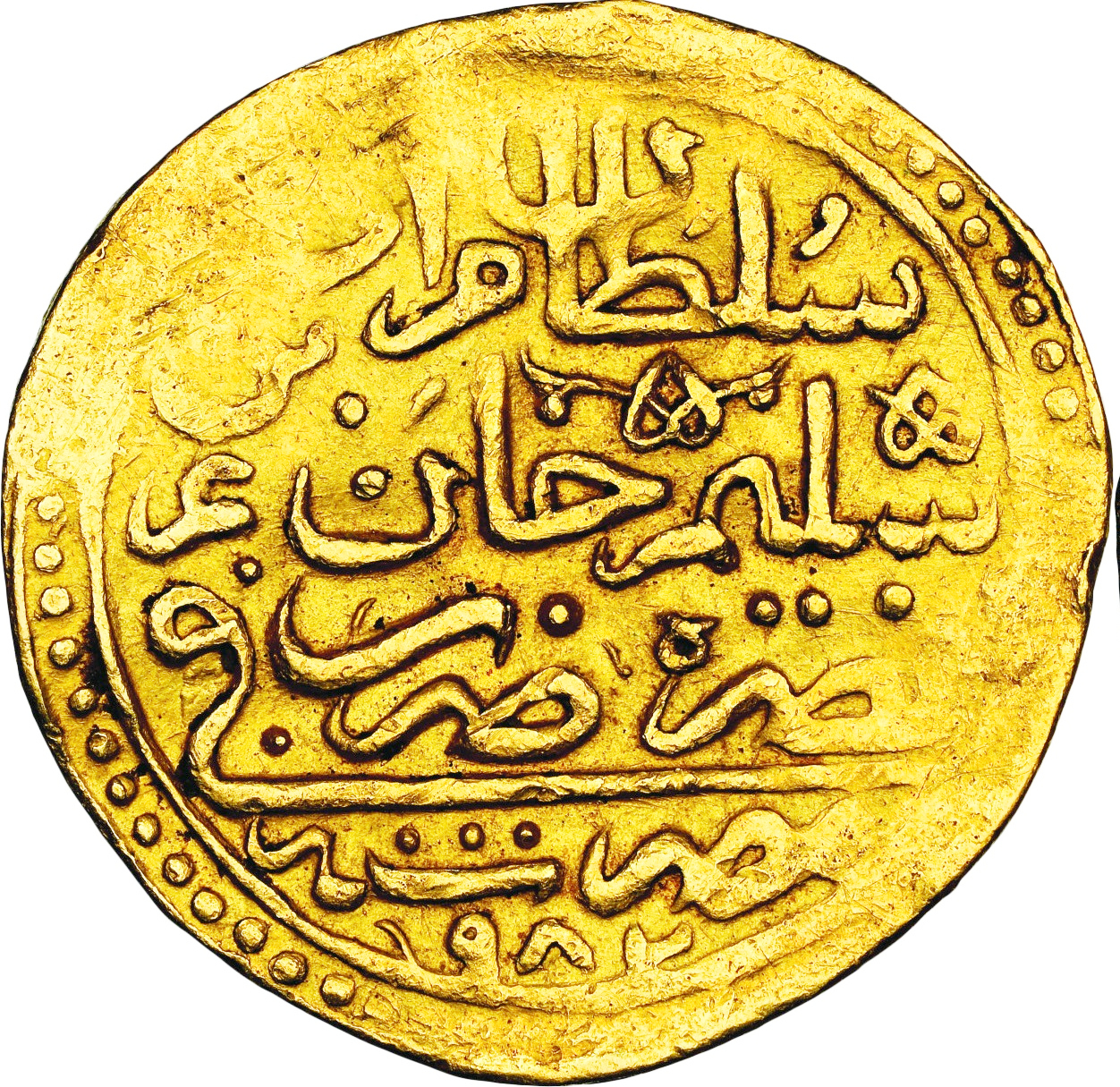
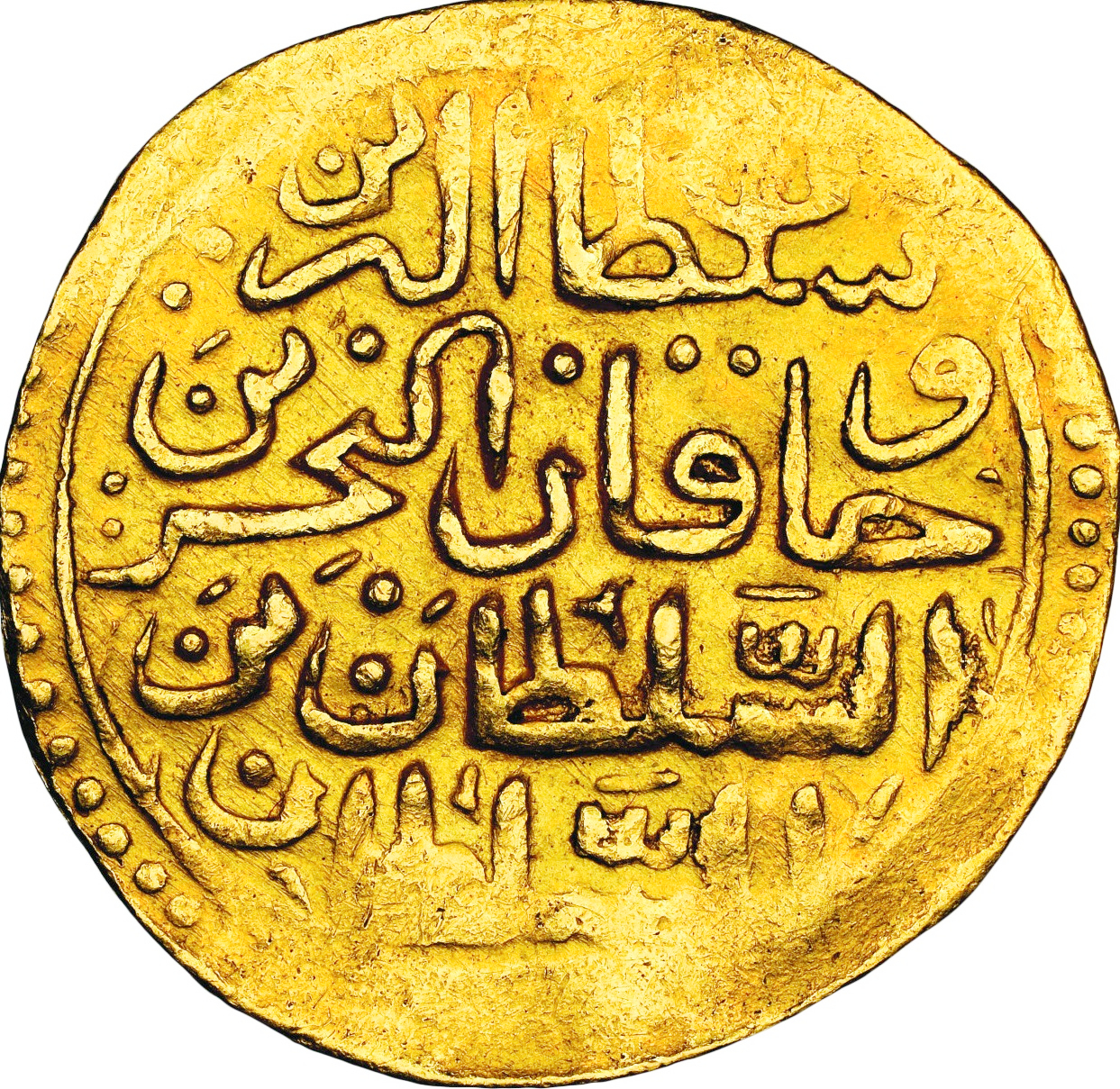
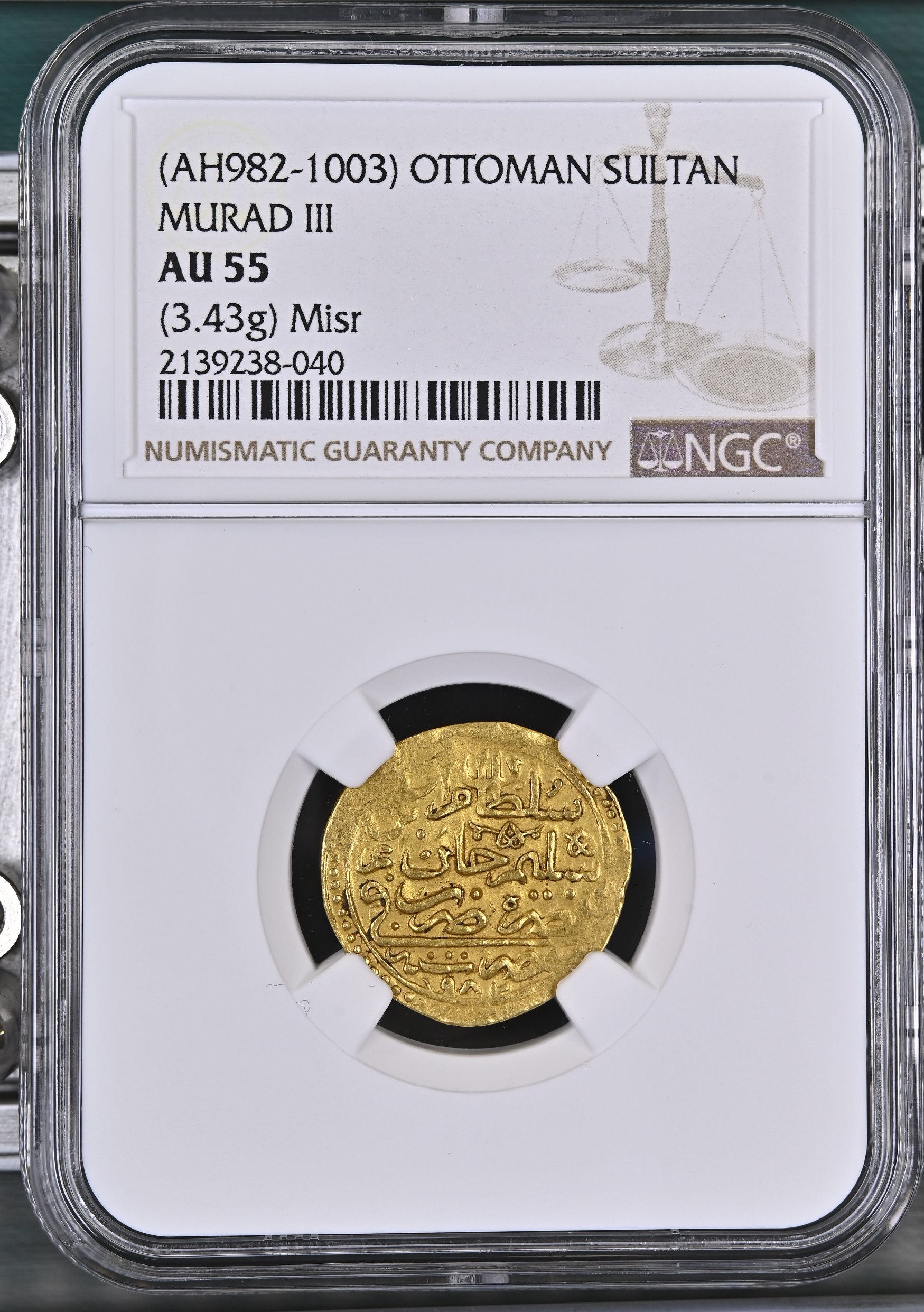
House of Emirates® in London is thrilled to offer its elite clientele with this majestic NGC certified Ottoman Gold Sultani of Sultan Murad III, struck in Misr (Egypt) in 982 AH (1574–1575 AD), a truly great investment-grade product embodying the splendor, authority, and financial supremacy of the Ottoman Empire at its zenith.
Sultan Murad III (982–1003 AH / 1574–1595 AD)
Mint: Misr (Egypt)
Date: 982 AH / 1574–1575 AD
Weight: 3.43 g
Diameter: ca. 22 mm
Reference: Album 1332; Friedberg 4 (Egypt)
Grading: NGC AU 55
Conservation: TTB-SUP
This exceptional Ottoman Gold Sultani represents one of the most iconic and internationally recognized gold denominations of the Islamic world. Modeled after the Venetian ducat to facilitate Mediterranean trade, the Sultani became the backbone of Ottoman commercial power across Europe, North Africa, and the Middle East.
Struck in the prestigious Cairo (Misr) mint in 982 AH — corresponding to 1574–1575 AD — this specimen was produced during the early years of Sultan Murad III’s reign, at a time when the Ottoman Empire was one of the most formidable political and economic forces in the world.
The obverse displays bold and elegant Arabic calligraphy proclaiming the Sultan’s name and titles, a refined expression of imperial legitimacy and Islamic sovereignty. The reverse carries the mint name “Misr” and the accession year formula, framed within a delicate dotted border characteristic of classical Ottoman numismatic artistry.
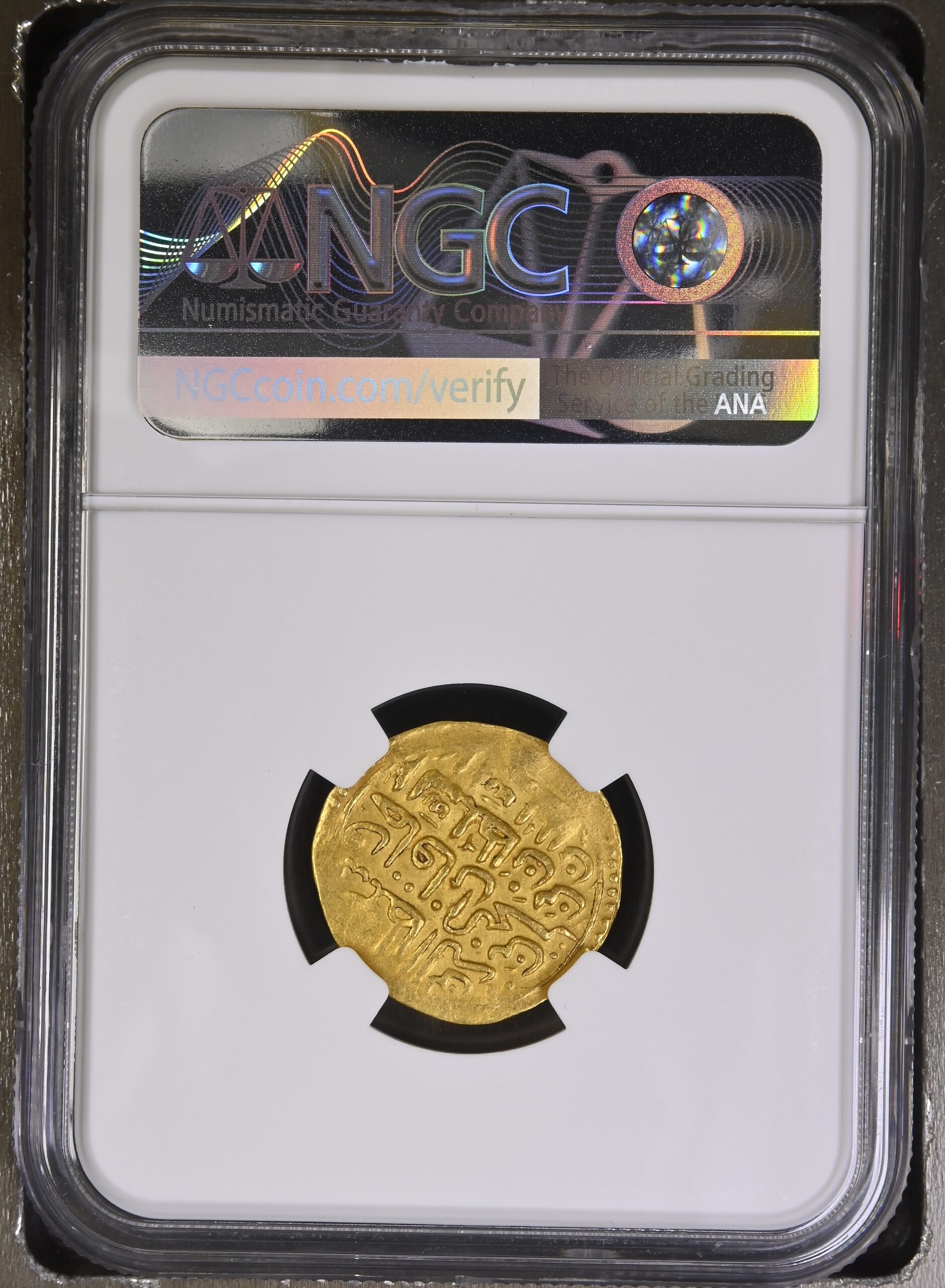
Weighing 3.43 grams of gold and measuring approximately 22 mm in diameter, this beautifully preserved example retains impressive detail and luster. Certified NGC AU 55, it shows only light circulation wear while maintaining strong strike clarity and visual harmony — making it a highly desirable great investment-grade product for discerning collectors and investors alike.
Historical Background – Sultan Murad III
Murad III ascended the Ottoman throne in 1574 following the death of his father, Selim II. His reign marked a significant chapter in Ottoman history, combining territorial expansion, artistic flourishing, and evolving court dynamics.
During Murad III’s rule:
The Ottoman–Safavid War (1578–1590) expanded Ottoman influence deep into the Caucasus.
The empire maintained naval and commercial dominance across the Mediterranean.
Diplomatic relations with European powers intensified, including significant correspondence with England under Queen Elizabeth I.
The imperial court became a vibrant center of artistic production, particularly in miniature painting, manuscript illumination, and refined calligraphy.
Although later years of his reign witnessed increasing court intrigue and the rising political influence of the imperial harem, Murad III presided over a still-powerful and globally connected empire whose economic strength was reflected in its gold coinage.
Gold Sultani coins from the Egyptian mint are especially prized due to Cairo’s strategic importance as a commercial and financial hub linking Africa, Arabia, and the Mediterranean world.
This remarkable Ottoman Gold Sultani stands as:
A certified and authenticated 16th-century Islamic gold issue
A prestigious Misr (Cairo) mint example
A type listed in major standard references (Album 1332; Friedberg 4)
A historically significant issue from the reign of Murad III
A visually appealing, well-centered strike with elegant calligraphy
A superb great investment-grade product combining historical prestige and intrinsic gold value
For Investors of Ottoman, Islamic, and world gold coinage, this piece represents both cultural heritage and enduring financial substance.
To hold this coin is to hold a fragment of a global empire that spanned three continents. It once circulated through bustling markets of Cairo, across caravan routes, and along Mediterranean trade lanes — a silent witness to the grandeur of Ottoman civilization.
An exceptional acquisition opportunity for advanced numismatists and sophisticated investors seeking a museum-worthy example of 16th-century Ottoman gold — and above all, a distinguished great investment-grade product of lasting historical and monetary significance.
Payments accepted by card or bank transfer:
Sign up to receive unique and personalised deals, special offers, information and new product launches.
Copyright© House of Emirates, All rights Reserved