By: House of Emirates®
The Shir-u Khurshid, or Lion and Sun, is not merely a symbol carved into flags and seals; it is a visual manifesto of Iranian civilization, standing at the crossroads of ancient Persian mythology, Islamic theology, and celestial cosmology. Long before the Safavid dynasty gave it official state recognition, the imagery of the lion and the sun circulated through Persian art, astrology, and royal insignia as a language of power understood without words. The lion, a timeless emblem of strength and sovereignty in Iranian culture, echoed pre-Islamic traditions reaching back to Achaemenid and Sasanian iconography, while the sun represented divine order, cosmic legitimacy, and the rhythm of fate itself. When Islam reshaped Persia’s spiritual landscape, these ancient symbols were not erased but transformed, absorbing new layers of meaning within an Islamic framework.
This fusion reached its most profound expression during the Safavid era, when Iran formally embraced Twelver Shia Islam, and symbolism became a political weapon as much as a spiritual one. The Lion and Sun thus evolved from an astronomical and royal motif into a declaration of identity, binding Persian heritage with Islamic destiny.
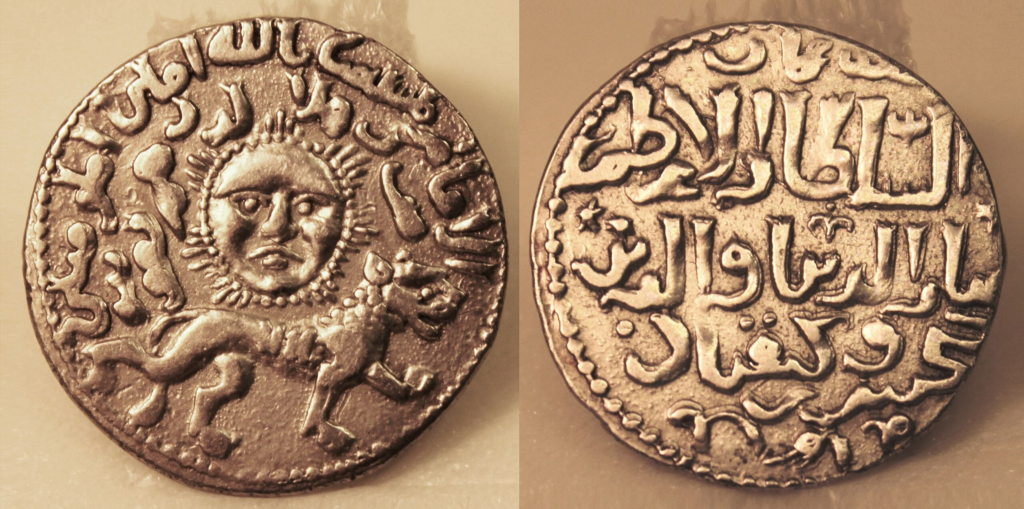
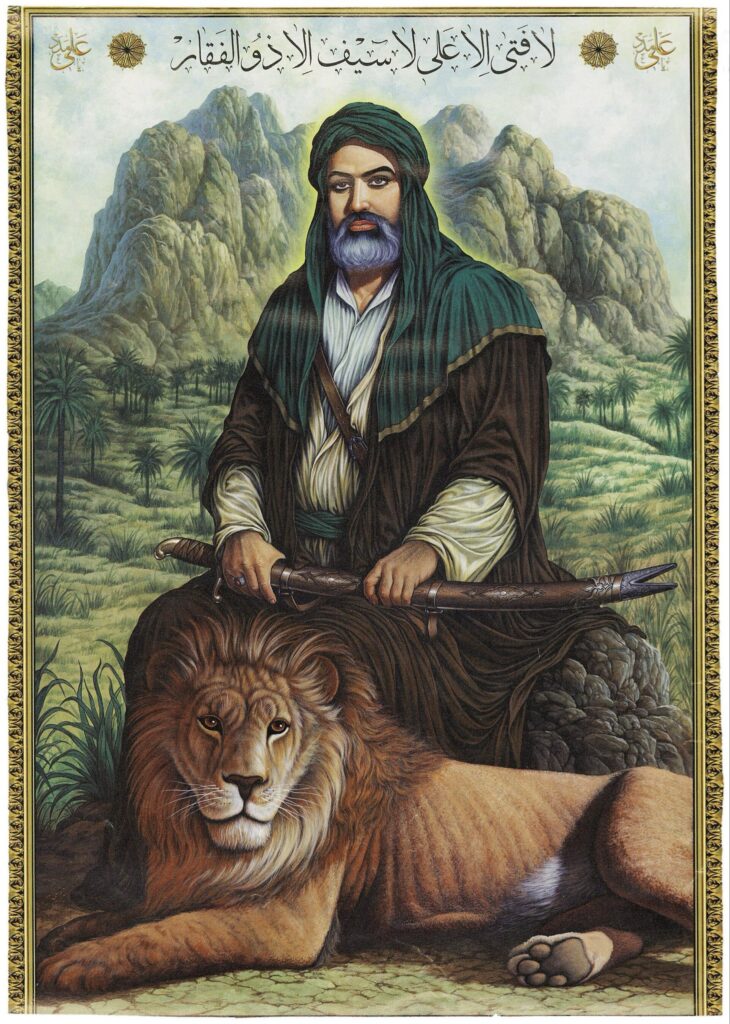
Under the Safavid dynasty (1501–1736), the Shir-u Khurshid acquired its most potent and enduring meaning, becoming inseparable from Shia religious symbolism and imperial authority. The lion was increasingly interpreted as a representation of Imam Ali ibn Abi Talib, the first Shia Imam, revered not only as a spiritual leader but as the embodiment of courage, justice, and divine legitimacy. Ali’s well-known title, “Asad Allah” (The Lion of God), made the association both natural and inevitable, transforming the lion from a general symbol of kingship into a sacred figure of Shia devotion. The sun, often depicted rising behind the lion, came to symbolize divine light, prophecy, and cosmic approval, reinforcing the Safavid claim that their rule was not merely political but divinely sanctioned.
This was no coincidence; the Safavids consciously weaponized symbolism to distinguish Iran from its Sunni Ottoman rivals, using the Lion and Sun as a visual boundary between competing visions of Islam. Coins, banners, architecture, and royal decrees bore the emblem, turning it into a daily reminder that Iranian sovereignty and Shia Islamic faith were inseparable, fused into a single, radiant image of power.
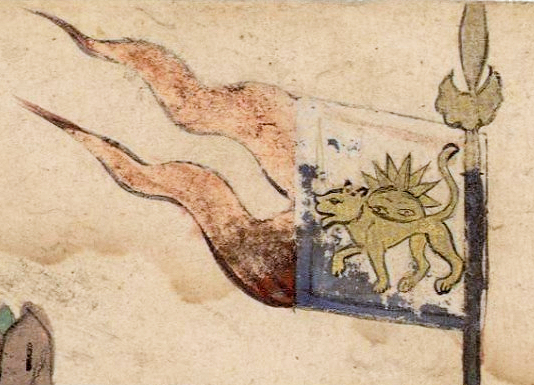
Over time, the Lion and Sun transcended dynasties and regimes, embedding itself into the very soul of Iranian national consciousness. It survived the fall of the Safavids, the rise of the Qajars, and the transformations of modern Iran, continually adapting while preserving its core meaning as a bridge between Persian identity, Islamic belief, and celestial order. Even when political narratives shifted, the symbol retained its gravitational pull, reminding Iranians of a time when mythology, Islam, and statecraft spoke the same visual language.
The Shir-u Khurshid is thus not frozen in history; it is a living archive, carrying within it the echoes of ancient Persian astronomy, the devotion of Shia Islam, and the ambitions of imperial Iran. Its enduring presence reveals a deeper truth about Iranian civilization itself: that continuity, not rupture, defines its story. Through the Lion and Sun, Iran declared to the world that its past would not be buried, its faith would not be diluted, and its identity would forever stand under the light of the sun, guarded by the lion of faith and destiny.