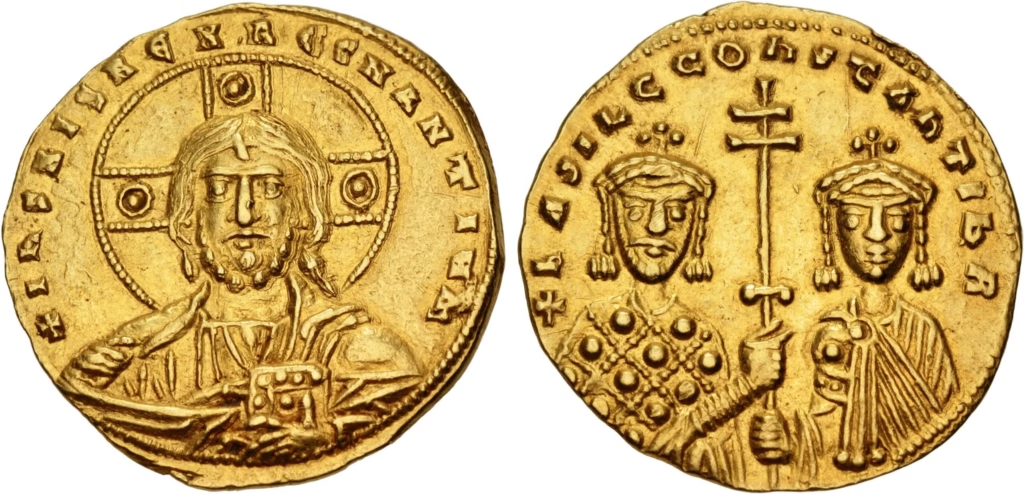
From the moment humanity learned to extract gold from the earth, it ceased to be merely a metal and became an idea — a promise that value could survive chaos. In ancient Mesopotamia, gold was already understood as a store of wealth immune to the erosion of time and political folly. While grain rotted, currencies were debased, and empires collapsed under the weight of their own ambition, gold remained untouched by decay or decree. Ancient Egyptians, who paid workers in grain and copper, reserved gold for what mattered most: temples, divine statues, and burial chambers meant to outlive eternity itself. This was not superstition; it was financial instinct. They understood inflation long before the word existed. When rulers diluted copper or silver to fund wars or monuments, gold retained its purchasing power, silently absorbing the excesses of human greed. Gold did not rise in value — currencies fell against it. This subtle truth, grasped thousands of years ago, still governs markets today. Gold was never an investment in growth; it was an insurance policy against collapse, a hedge against the invisible tax imposed by reckless authority.
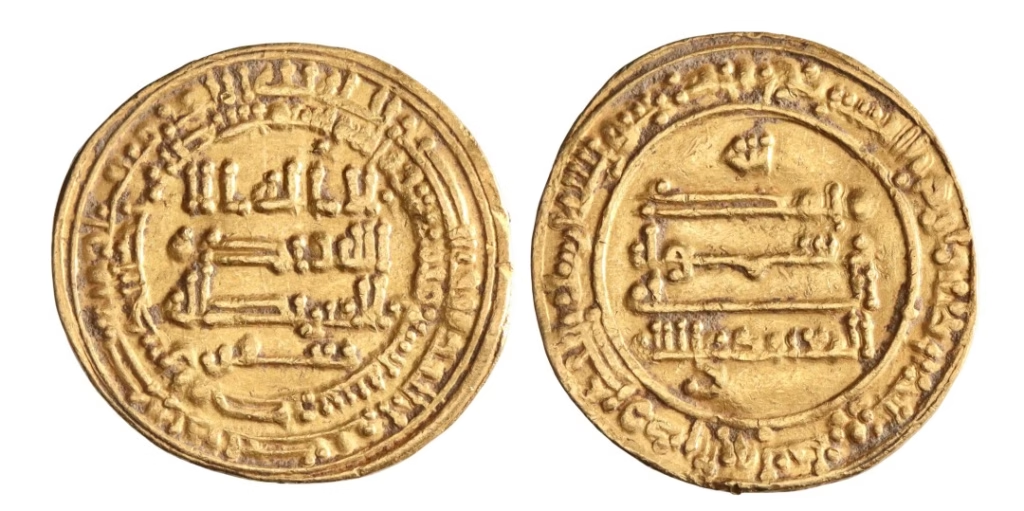
In ancient Rome, this understanding became painfully clear. As the empire expanded, emperors began debasing silver coins, reducing their precious metal content while keeping the same face value. Inflation followed like a shadow. Prices soared, trust eroded, and commerce slowed. Yet gold aurei, minted with strict purity, retained their power. Roman elites hoarded gold not out of vanity, but survival. They knew paper promises and diluted coinage could not protect wealth when the state itself became desperate. Across ancient India, gold served a similar role, woven into culture, religion, and trade as a defense against uncertainty.
Dynasties rose and fell, borders shifted, but gold jewelry passed through generations without losing relevance or worth. In China, gold was less common than silver, yet it remained the ultimate reserve during periods of hyperinflation caused by excessive coin minting. Across civilizations that never met, a shared conclusion emerged independently: gold does not obey kings. It does not multiply on command. It does not forgive excess. And precisely because of this, it preserves value when inflation devours everything else. Gold’s power was not declared; it was discovered through centuries of economic pain.
What makes gold extraordinary is not mythology, but mathematics and human behavior. Gold is finite, costly to extract, and impossible to counterfeit at scale — qualities ancient civilizations recognized intuitively. When inflation struck due to war spending, failed harvests, or political corruption, gold acted as a silent witness and refuge. It became the asset of last resort when trust evaporated. This is why ancient treasures still command astronomical value today, not only as artifacts but as preserved purchasing power across millennia.
A single Roman gold coin can still buy a tailored suit, just as it could two thousand years ago. That is not coincidence; it is continuity. In an age obsessed with digital numbers and printed promises, the ancient use of gold as an inflation hedge feels less like history and more like prophecy. Civilizations that respected gold endured longer; those that ignored its warning paid the price. Gold was never about wealth display — it was about wealth survival. And long before economists built models or central banks invented inflation targets, ancient humanity had already solved the equation. When everything else fails, gold remembers value.