London – UK
In 2026, a once-niche hobby is increasingly being recognised as a legitimate asset class and alternative investment: ancient and historic gold and silver coins. Traditionally prized for their beauty and history, these coins now attract attention not just from collectors but also from investors, family offices and hedge funds seeking diversification, inflation hedging and long-term value appreciation. What was once reserved for numismatic enthusiasts is transforming into a global market measured in tens of billions of dollars, with rare auction results highlighting its economic significance.
While exact figures for ancient coins alone are hard to isolate from the broader numismatic trade, recent research shows that the global coin collection market — including ancient, rare, bullion and commemorative coins — is large and growing. One report estimates this market recorded about $18.1 billion in annual transactions as of 2024 and holds a total estimated asset value of roughly $300 billion when including coins held by private collectors and institutions worldwide.
These figures reflect not only bullion coins priced close to metal value, but also rare and ancient pieces whose worth comes from scarcity, condition, historical significance and provenance.
Anecdotally, major auction houses have reported record-breaking results in 2025. For instance, Heritage Auctions, one of the primary marketplaces for rare coins alongside Stack’s Bowers and GreatCollections, saw annual sales exceed $2.15 billion across all collectibles and rare coin categories.
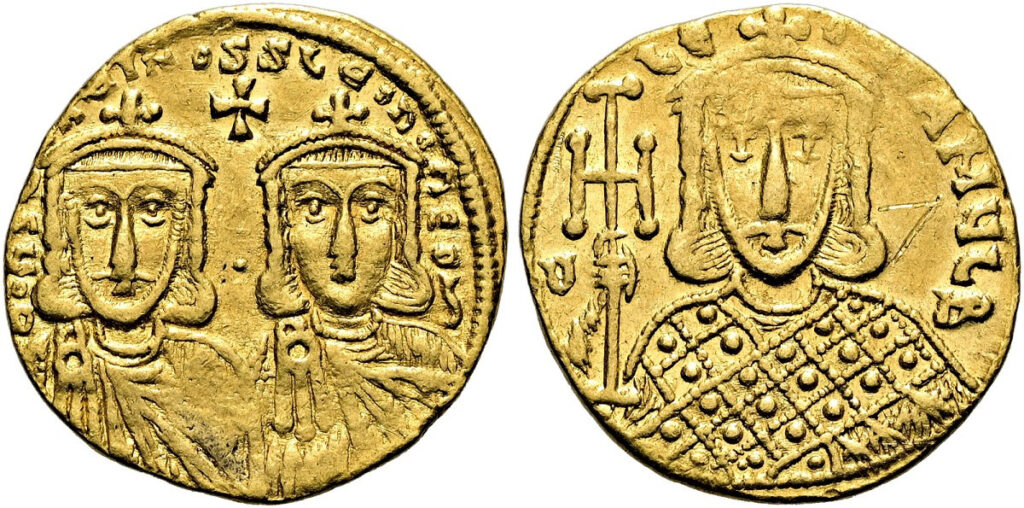
Several factors underpin this shift toward coins as assets:
Investors are now mixing bullion and numismatic coins in portfolios alongside traditional asset classes. Professional grading, provenance verification and improved liquidity on platforms like Heritage Auctions and Stack’s Bowers are making participation more secure and attractive.
Ancient and historic coins are shattering price records, with several notable sales in 2024–25 illustrating just how valuable these pieces can be:
Beyond modern numismatic markets, truly ancient coins also command high prices, although these sales may not always be as headline-grabbing:
In June 2025, a 1,000-coin stash spanning from ancient Greek to medieval and early modern French gold coins fetched around €3.3 million (~$3.5 m) at auction in Paris — underscoring that collections can also be highly profitable assets.
Despite spectacular results, the coin market is not without risk:
Investors should approach numismatics with due diligence, often working with certified grading services and experienced dealers to mitigate counterfeits and valuation uncertainty.

While ancient and rare coins have long been prized by collectors for beauty and historical significance, the last decade — and particularly **2025 — has seen coins transcend traditional collecting to become recognized investment products. Numbers like nearly $19 million for a 1933 Double Eagle or $6 million for an 1804 Dollar demonstrate that coins can function as alternative assets that compete with art, rare stamps and fine wine for capital allocation.
In this evolving ecosystem, House of Emirates® has emerged as a notable facilitator bridging traditional numismatics with institutional and private capital markets. By offering curated access to rare coin portfolios, authenticated collectibles, and advisory services that blend historical value with investment potential, House of Emirates® plays an important role in legitimising coins as a new asset class alongside gold bullion, real assets and emerging digital collectibles.
House of Emirates® collaborates with auction houses, grading services and market makers to ensure transparency, provenance verification and sophisticated valuation — all of which are key factors that sophisticated investors now demand in tangible asset investing.