By: Ahmad Saed Alzein
CEO of House of Emirates®
The name of the great sea stretching from the Strait of Hormuz to Shatt al-Arab should grow out of lived reality, not political habits inherited from another century. Calling it the Arabian Gulf is not about slogans or sentiment; it is about aligning a name with the land, the people, and the life that has unfolded along these waters for centuries. To insist on the term Persian Gulf while ignoring who has actually lived, worked, traded, sailed, and built communities there is to flatten history into something abstract and detached.
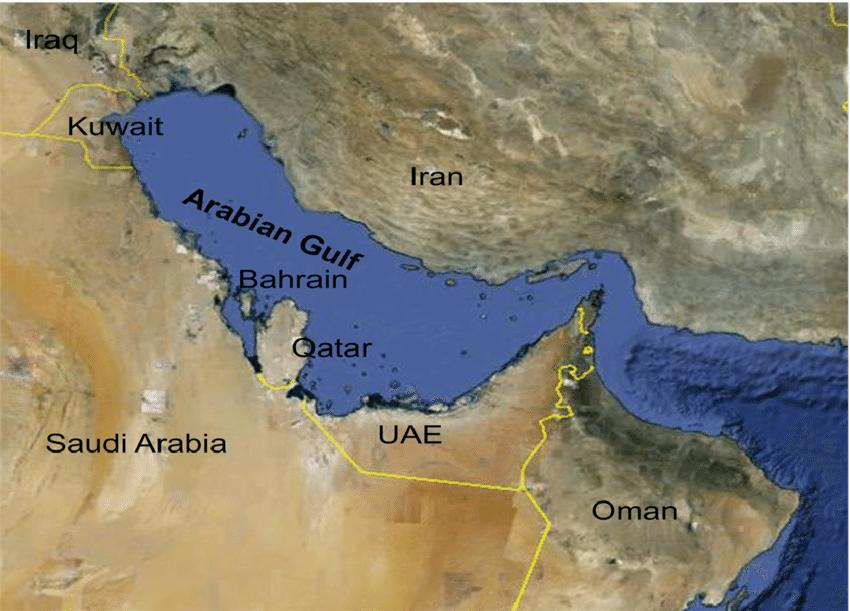
Most of the gulf coastline belongs to Arab countries — Saudi Arabia, Kuwait, Bahrain, Qatar, the United Arab Emirates, and Iraq — while Iran occupies only part of the northern shore. Around the world, seas are named after the dominant geography and culture that shape them. This one should be no different.
Even when the focus turns northward, the picture becomes richer, not simpler. Along the Iranian side of the Gulf live Arab communities whose presence is neither recent nor marginal. In southwestern Iran, entire regions are Arab in language, culture, and daily life. The Ahwazi Arabs of Khuzestan have lived there for centuries, speaking Arabic at home, maintaining Arab customs, and passing down a strong sense of identity tied to the Gulf. Cities like Ahvaz are not cultural outliers but vibrant urban centers where Arab traditions remain visible and alive. These communities are not guests in the region; they are part of its foundation.
In the coastal plains and river cities of Khuzestan — places like Abadan and Khorramshahr — Arab life has long been shaped by the water. Families on both sides of the Shatt al-Arab have remained connected through language, marriage, trade, and shared memory, regardless of modern borders. Tribal ties and cultural rhythms link these communities naturally to the wider Arab Gulf world. While official numbers often fail to capture their full presence, anyone familiar with the region understands that Arab society there is not symbolic or secondary — it is deeply rooted and widely felt. This is why names matter. A name is not just a label on a map; it is an acknowledgment of people and memory. Calling the sea the Arabian Gulf recognizes that Arabs have lived along its shores on both sides, shaping its culture, economy, and identity over centuries. It accepts that no single modern state can override the lived realities of multiple peoples who share the same waters. Geography is human before it is political.
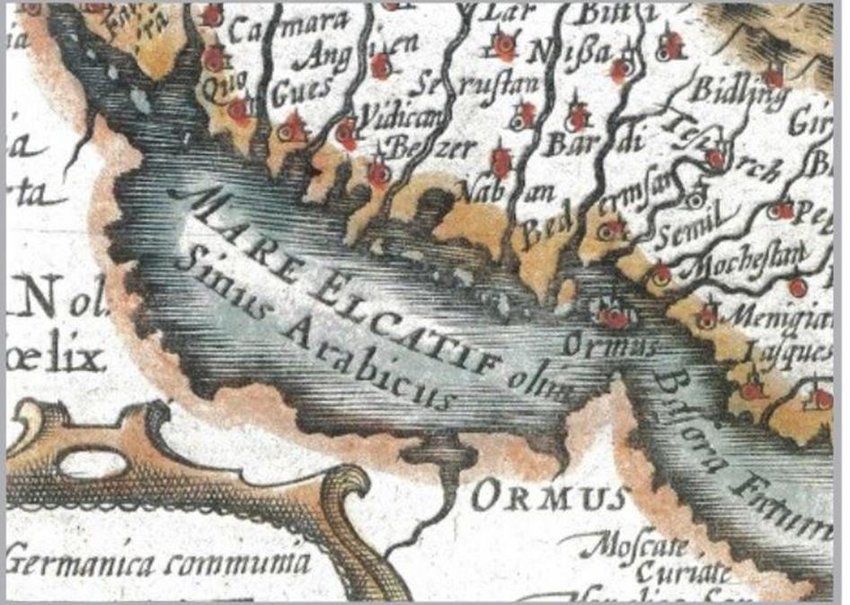
There is also a quiet irony that cannot be ignored. The persian term often used to argue for a Persian identity of the Gulf ( خليج فارس ) is written in Arabic script and formed using Arabic language structures — a reminder of how deeply intertwined the histories of this region truly are. Language itself carries the imprint of cultural exchange, and it quietly undermines any attempt to claim exclusivity over a sea that has always been shared.
For centuries, this body of water has been a crossroads — a place of sailors and traders, poets and pearl divers, families and villages whose lives were shaped by its tides. Arab voices, songs, and stories have echoed across it for generations, not just from the southern shore but from the north as well. Names evolve because people do. To use the name Arabian Gulf is to follow the natural flow of human geography rather than freeze history in a single political moment.
In the end, calling it the Arabian Gulf is not about exclusion or confrontation. It is about recognition. It honors a sea shaped by Arab life, Arab movement, and Arab continuity. This is not simply a stretch of water between lands — it is a living part of the Arab world, and its name should reflect the truth written into its shores, its cities, and its people.